





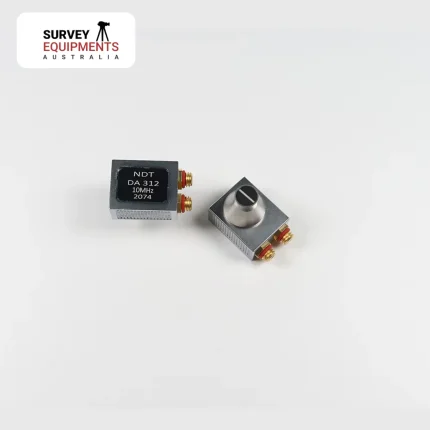


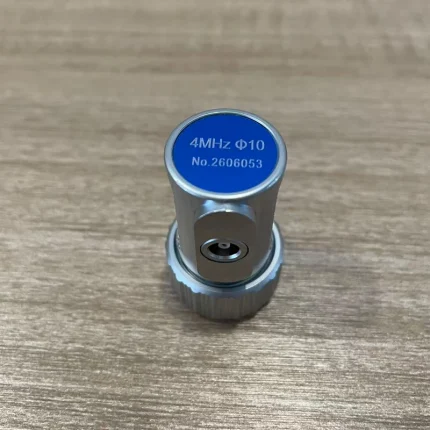
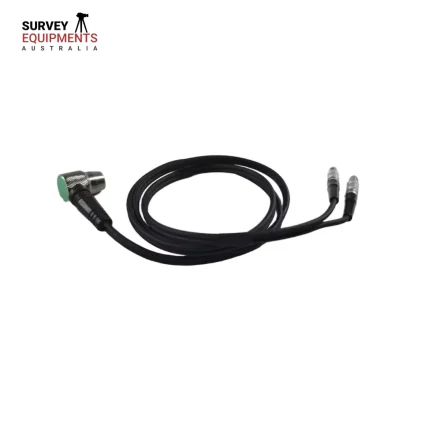
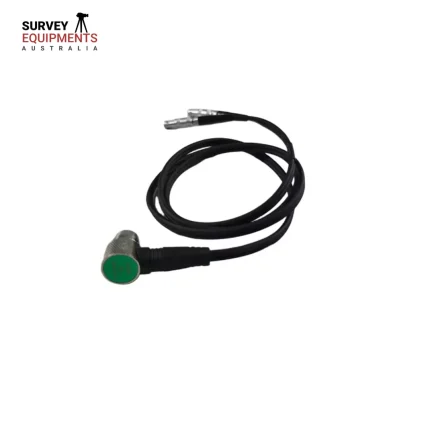
The Dual Crystal ULTRASONIC Probe is a dual-Element Straight-beam ultrasonic transducer designed for non-destructive testing (NDT), ultrasonic flaw detection, and material inspection. Available in 2MHz, 4MHz, and 5MHz configurations, these probes provide focused ultrasonic inspection for detecting internal discontinuities and evaluating material condition.
A dual-crystal ultrasonic probe uses two separate piezoelectric elements housed within the same probe assembly. One element transmits ultrasonic energy while the other receives the returning signal. This configuration is commonly used for straight-beam inspection where reliable detection of near-surface and internal material indications is required.
The available models include 5P10FG10, 2P11FG8, 4P3.5×10FG10, 4P3.5×10FG18, and 2P12FG10, providing different frequency, element-size, and focal-length options for various inspection requirements.
Technical Specifications
| Specification | Details |
| Product Type | Dual Crystal Ultrasonic Probe |
| Probe Design | Dual-Element Straight Beam |
| Application | Ultrasonic NDT / Flaw Detection |
| Available Frequencies | 2MHz, 4MHz, 5MHz |
| Model Options | 5P10FG10, 2P11FG8, 4P3.5×10FG10, 4P3.5×10FG18, 2P12FG10 |
| Element Configuration | Dual Crystal |
| Element Sizes | 10mm, 11mm, 3.5 × 10mm, 12mm |
| Focal Length Options | 8mm, 10mm, 18mm |
| Beam Type | Straight Beam |
| Inspection Method | Ultrasonic Testing (UT) |
| Typical Application | NDT Material and Weld Inspection |
Key Features
- Dual-element construction for transmit-and-receive ultrasonic inspection
- Straight-beam design for direct ultrasonic energy transmission into the test material
- Available in 2MHz, 4MHz, and 5MHz frequency configurations
- Multiple element sizes and focal lengths for different inspection applications
- Designed for ultrasonic flaw detection and NDT material inspection
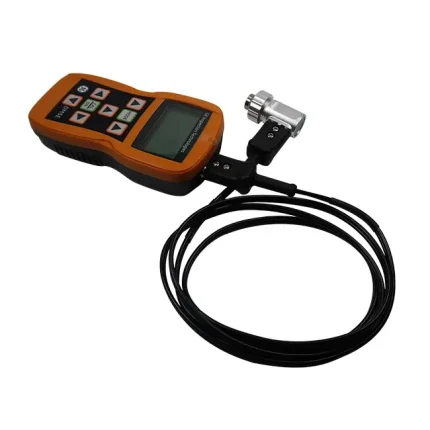
- Suitable for use with compatible ultrasonic flaw detectors and thickness-testing equipment
- Useful for inspecting metals and other suitable materials where internal discontinuity detection is required
- Multiple model options allow buyers to select the probe configuration appropriate for their inspection task
Available Probe Models
Model Number | Frequency | Element Size | Focal Length |
| 5P10FG10 | 5 MHz | Ø10 mm / 2 | 10 mm |
| 2P11FG8 | 2 MHz | Ø11 mm / 2 | 8 mm |
| 4P3.5×10FG10 | 4 MHz | 3.5 × 10 mm | 10 mm |
| 4P3.5×10FG18 | 4 MHz | 3.5 × 10 mm | 18 mm |
| 2P12FG10 | 2 MHz | Ø12 mm / 2 | 10 mm |
5P10FG10
- Frequency: 5MHz
- Element configuration: Dual crystal
- Element size: 10mm
- Focal length: 10mm
2P11FG8
- Frequency: 2MHz
- Element configuration: Dual crystal
- Element size: 11mm
- Focal length: 8mm
4P3.5×10FG10
- Frequency: 4MHz
- Element configuration: Dual crystal
- Element size: 3.5 × 10mm
- Focal length: 10mm
4P3.5×10FG18
- Frequency: 4MHz
- Element configuration: Dual crystal
- Element size: 3.5 × 10mm
- Focal length: 18mm
2P12FG10
- Frequency: 2MHz
- Element configuration: Dual crystal
- Element size: 12mm
- Focal length: 10mm
Benefits of a Dual-Element Straight Beam Probe
Improved Inspection of Internal Discontinuities
The dual-element configuration separates the transmitting and receiving functions, making this type of ultrasonic transducer useful for detecting internal reflectors within suitable test materials.
Multiple Frequency Options
The 2MHz, 4MHz, and 5MHz options allow inspectors to select a probe according to the required inspection conditions, material characteristics, and desired ultrasonic response.
Different Focal Configurations
The available focal lengths of 8mm, 10mm, and 18mm provide different inspection configurations. Selecting the appropriate focal length can help optimize the probe for the intended inspection region.
Practical NDT Inspection
The straight-beam configuration is suitable for applications requiring ultrasonic energy to enter the test material directly from the probe face.
Typical Applications
This dual crystal ultrasonic probe can be used for a range of ultrasonic testing applications, including:
- Non-destructive testing (NDT)
- Ultrasonic flaw detection
- Internal discontinuity inspection
- Material condition assessment
- Metal inspection
- Industrial component inspection
- Weld and fabrication inspection
- Ultrasonic Thickness-related inspection applications
- General-purpose straight-beam ultrasonic testing
The appropriate probe model should be selected according to the material, inspection geometry, required focal region, ultrasonic instrument, and testing procedure.
How to Choose the Right Ultrasonic Probe
Choosing the correct dual-element ultrasonic probe depends primarily on frequency, element size, and focal length.
Choose by Frequency
- 2MHz: Suitable when a lower-frequency configuration is preferred for the inspection application.
- 4MHz: Provides an intermediate frequency option for general ultrasonic inspection requirements.
- 5MHz: Provides a higher-frequency option for applications requiring the characteristics of a 5MHz probe.
Choose by Focal Length
The available models provide 8mm, 10mm, and 18mm focal-length configurations. Select the focal length according to the area and depth of interest specified by your inspection procedure.
Choose by Element Size
Different element dimensions provide different probe configurations. Confirm the required probe dimensions and inspection specifications before ordering.
Buyer Considerations
Before purchasing, verify:
- Required operating frequency
- Element dimensions
- Required focal length
- Ultrasonic flaw detector or instrument connection
- Probe shoe/contact requirements
- Material being inspected
- Applicable NDT procedure or inspection standard
Important: The ultrasonic instrument and probe connection should be checked before purchase to ensure the selected probe is suitable for the intended testing setup.
Why Choose This Dual Crystal Ultrasonic Probe?
With multiple 2MHz, 4MHz, and 5MHz configurations and different element sizes and focal lengths, this straight-beam ultrasonic probe range provides practical options for professional NDT inspection. Selecting the correct model according to the inspection procedure helps ensure the probe’s frequency and focal characteristics are appropriate for the intended application.
Frequently Asked Questions
What is a dual crystal ultrasonic probe?
A dual crystal ultrasonic probe is an ultrasonic transducer containing separate transmitting and receiving elements. It is commonly used for non-destructive testing and ultrasonic flaw detection.
What is a straight-beam ultrasonic probe used for?
A straight-beam ultrasonic probe introduces ultrasonic energy directly into the test material and is commonly used to inspect materials for internal discontinuities and other indications.
What frequencies are available for these probes?
The listed probe models are available in 2MHz, 4MHz, and 5MHz configurations.
What is the difference between 5P10FG10 and 2P11FG8?
The 5P10FG10 is a 5MHz probe with a 10mm element size and 10mm focal length, while the 2P11FG8 is a 2MHz probe with an 11mm element size and 8mm focal length.
Which model has an 18mm focal length?
The 4P3.5×10FG18 model has a 4MHz frequency, 3.5 × 10mm element size, and 18mm focal length.
Are these probes suitable for ultrasonic flaw detection?
Yes. These dual-element straight-beam probes are intended for ultrasonic non-destructive testing and flaw-detection applications, subject to the requirements of the specific instrument, material, and inspection procedure.
Can I use any model with my ultrasonic flaw detector?
Not necessarily. The probe’s connector, electrical characteristics, frequency, and other interface requirements should be verified against the ultrasonic flaw detector before purchase.
How do I select between the 2MHz, 4MHz, and 5MHz versions?
Selection should be based on the inspection procedure, material, required resolution, attenuation characteristics, inspection depth, and the characteristics required by the ultrasonic testing instrument. If a formal NDT procedure is being followed, select the probe specified by that procedure.




Reviews
There are no reviews yet.