





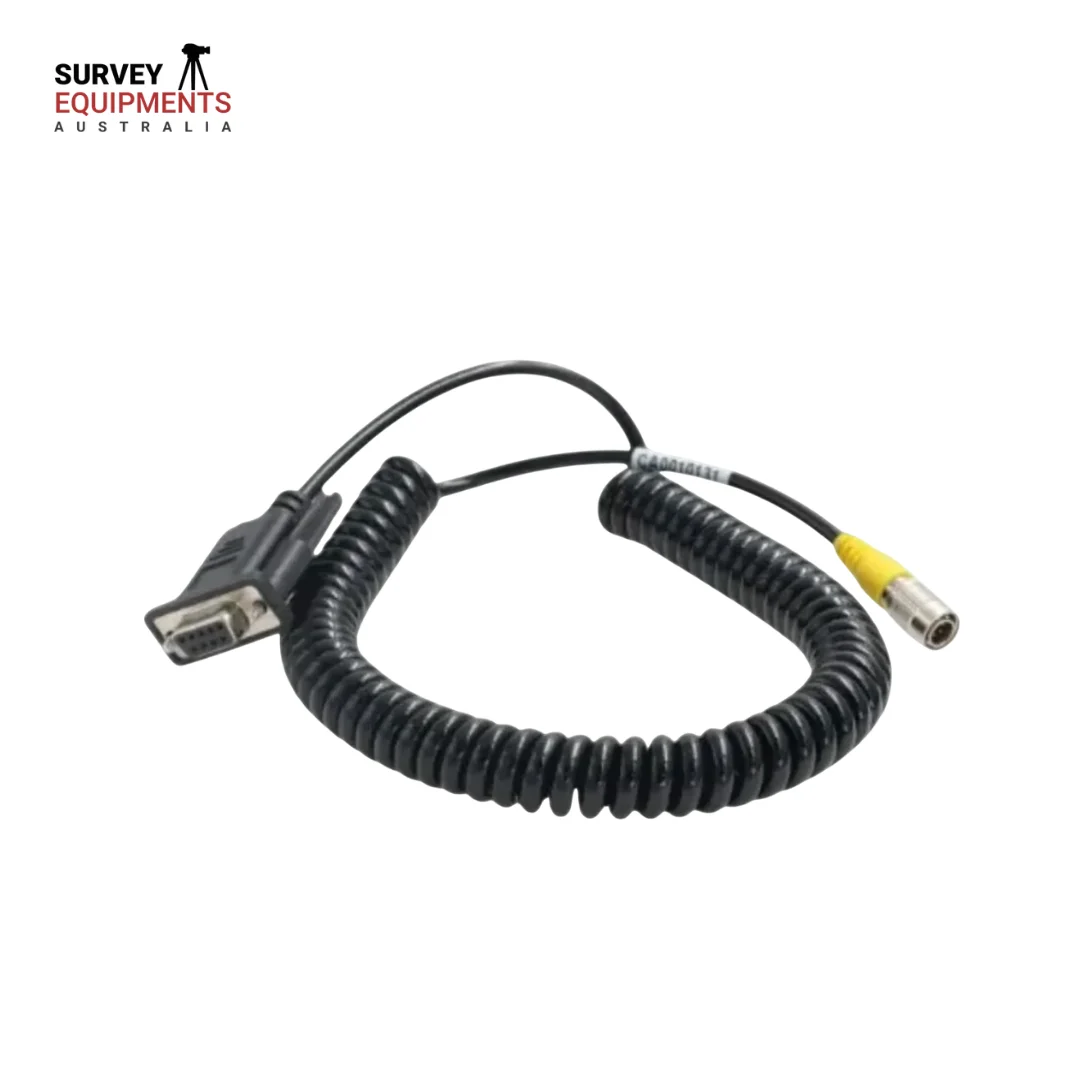
This coiled 6 pin Hirose male to DB9 RS232 cable connects a total station’s 6-pin Hirose data port to the 9-pin serial port of a data collector, PC or serial-to-USB adapter. You can use it to transfer survey data, run field software on a controller, or upload coordinates and jobs to the instrument.
The coiled middle section stretches when you need reach, then springs back so it doesn’t snag on the tripod or tangle in the case. A yellow-booted Hirose plug locks into the instrument, and a moulded female DB9 connects to the collector or computer.
Which Instruments Use a 6 Pin Hirose Male to DB9 RS232 Cable?
| Brand | Instrument examples | Notes |
|---|---|---|
| Topcon | GTS-200/250 series, GTS-100N, GPT series | 6-pin Hirose RS-232 data port |
| Sokkia | SET 50/60 series and similar SET models | 6-pin Hirose RS-232 data port |
| Nikon | DTM, NPL and NPR series | 6-pin Hirose data port |
| Data collectors | TDS / Carlson / Spectra collectors with DB9 serial | Female DB9 end |
Pin wiring can differ between brands and models. Tell us your instrument when ordering and we will confirm the cable suits it. This cable does not fit instruments with Lemo connectors, such as total stations for Leica.
Sources: 6-pin to 9-pin serial cable for Topcon GTS-250 / Sokkia SET-60 (Tiger Supplies), Hirose 6-pin to DB9 coiled cable for Nikon total stations / TDS data collectors.
Technical Specifications
| Specification | Detail |
|---|---|
| Connector A | 6-pin Hirose, male (instrument end) |
| Connector B | DB9 RS-232 serial, female |
| Cable type | Coiled with straight leads, shielded |
| Length | About 1.5–2.0m extended |
| Interface | RS-232 serial |
| Use | Total station to data collector or PC data transfer |
Key Features
- Coiled design stretches for reach and retracts to stay tidy.
- Locking Hirose plug stays secure on the instrument.
- Female DB9 plugs straight into collectors and PCs.
- Shielded cable for reliable serial communication on site.
Using the Cable with a Modern Computer
Most laptops no longer have a 9-pin serial port. Add a USB-to-RS232 adapter on the DB9 end and install its driver. In your download software (such as Topcon Link, Sokkia Link or Nikon Transfer), set the same baud rate, parity, data bits and stop bits as the instrument’s communication settings.
Troubleshooting a Serial Connection
If no data comes through, first check that the communication settings match exactly on both ends: baud rate (often 9600 or 1200 on older instruments), parity, data bits and stop bits. Next, make sure the instrument’s output is set to the serial port rather than an internal card or Bluetooth. Then confirm that the USB adapter’s COM port number matches the one chosen in the software. Older Topcon, Sokkia and Nikon instruments can also need a specific download mode selected in the menu. If it still fails, try another USB adapter, because cheap adapters are a common cause of dropped connections.
Keep a Spare Data Cable
Data cables get stepped on, pulled out at an angle and left in wet ground more often than any other accessory. A spare 6 pin Hirose male to DB9 RS232 cable in the instrument case means a damaged cable never stops a download at the end of the day.
How to Connect
- Switch the instrument off.
- Line up the Hirose plug’s key and push it into the data port until it clicks.
- Connect the DB9 end to the collector, PC or USB adapter.
- Match the communication settings on both devices.
- Switch on and start the download or data collection.
Care Tips
Pull the plug by its body, not the cable, and fit dust caps when not in use. Don’t over-stretch the coil, and keep the connectors dry and clean.
Frequently Asked Questions
Q: Does this 6 pin Hirose male to DB9 RS232 cable fit Topcon total stations?
A: Yes. It suits Topcon GTS and GPT models with a 6-pin Hirose data port.
Q: Does it fit Leica total stations?
A: No. Leica instruments use Lemo connectors.
Q: Can I connect it to a laptop?
A: Yes, with a USB-to-RS232 adapter on the DB9 end.
Conclusion
This coiled 6 pin Hirose male to DB9 RS232 cable is a dependable data link between Topcon, Sokkia and Nikon total stations and serial data collectors or computers.


Reviews
There are no reviews yet.