



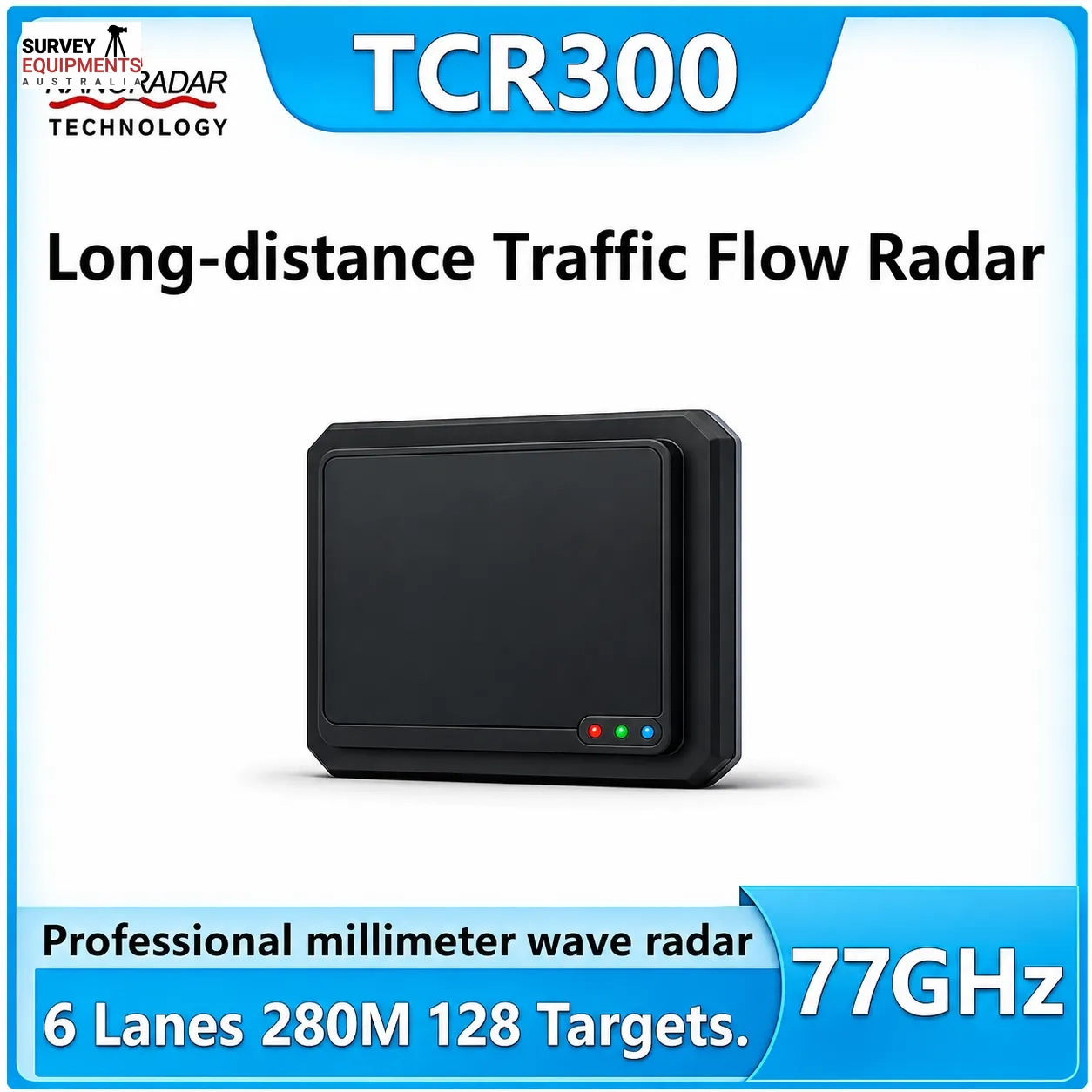
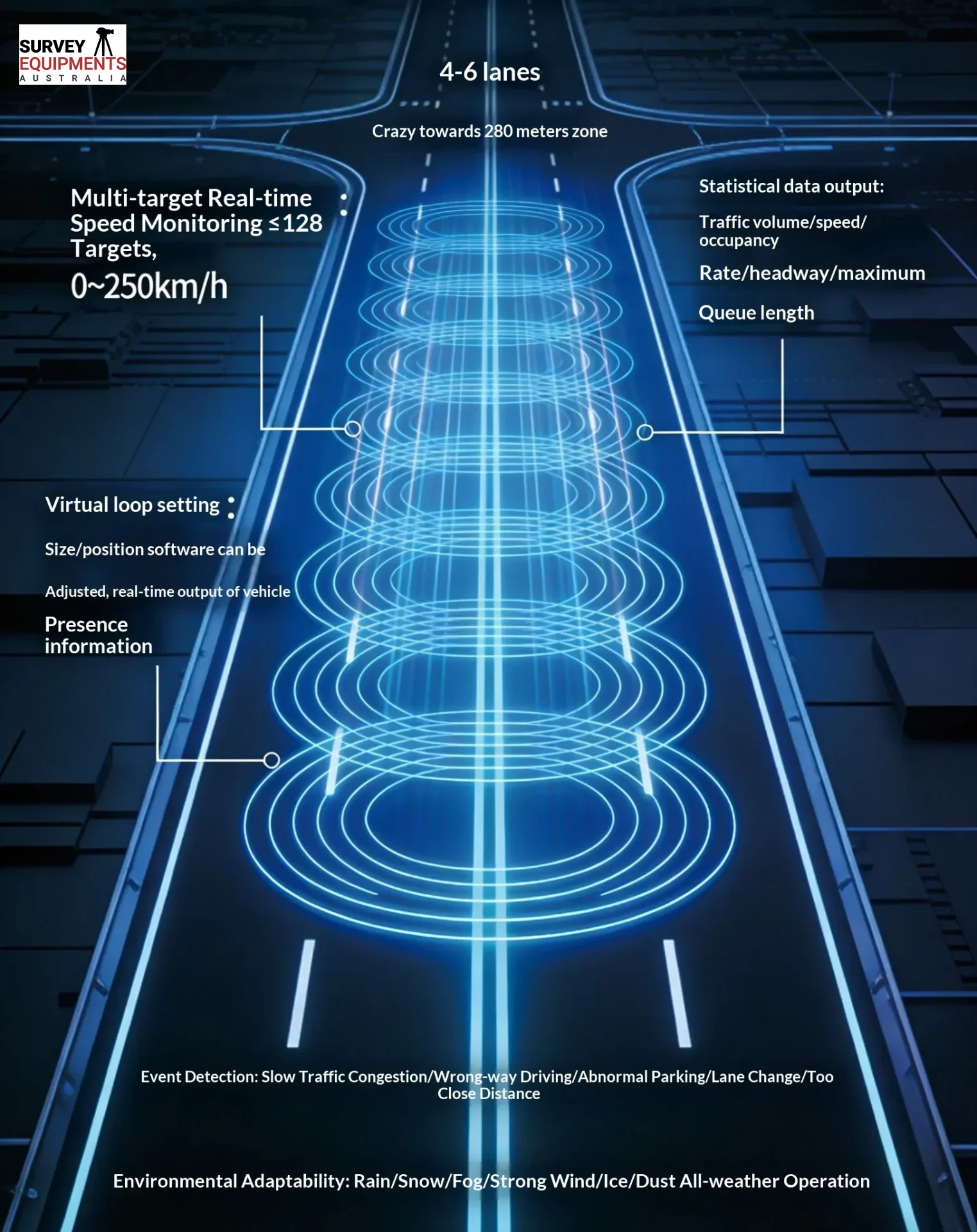


The Nanoradar TCR300 is a 77GHz FMCW millimetre wave traffic flow radar that detects and tracks up to 128 vehicles at the same time across 4 to 6 lanes, with a maximum detection distance of 280 metres. It outputs real-time speed, traffic volume, lane occupancy, headway and queue length data, and detects traffic incidents such as wrong-way driving, abnormal parking and congestion, making it a dependable sensor for intelligent transportation systems (ITS), urban intersections and high-speed road sections.
The TCR300 long-distance traffic radar emits a fan-shaped microwave beam towards the road and measures the distance, speed and angle of every vehicle in its field of view. Because it works on radio waves rather than light, it keeps collecting accurate data in rain, snow, fog, strong wind, ice, dust, glare and darkness. It is offered with an RS485 or RJ45 (Ethernet) interface and in a speed monitoring or flow monitoring configuration.
Key Benefits of the TCR300 Traffic Flow Radar
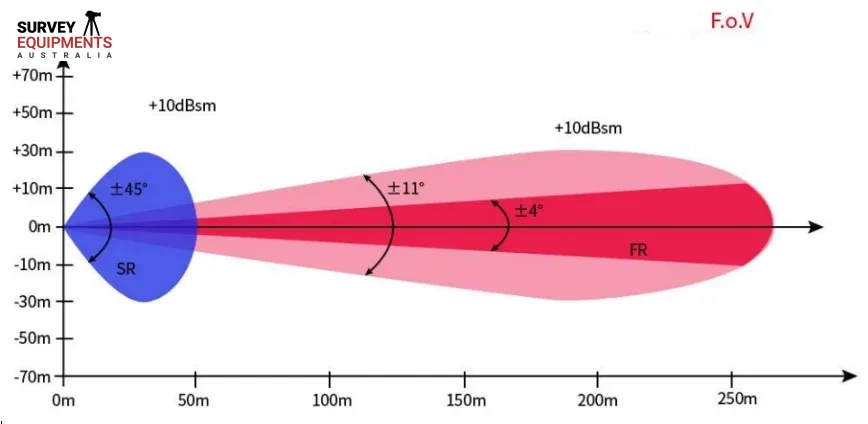
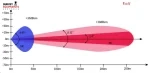
- Long detection range: Up to 280 m on the long range beam (LRR) and up to 50 m across a ±45° wide beam (MRR).
- Multi-lane coverage: Monitors 4 to 6 lanes from a single roadside or overhead mounting point.
- High target capacity: Detects and tracks up to 128 targets simultaneously in real time.
- Wide speed range: Measures vehicle speeds from 0 to 250 km/h with ±0.36 km/h speed accuracy.
- Fast refresh: 80 ms cycle period for timely flow statistics and incident alerts.
- All-weather operation: Unaffected by rain, snow, fog, strong wind, ice and dust; IP66 sealed housing.
- Low power and light weight: 12 VDC supply, ≤4 W consumption and only 650 g.
- Easy set-up: Virtual detection loops are configured in software, so no road cutting or in-pavement loops are needed.
Features of the 77GHz Millimetre Wave Traffic Radar
Multi-Target Real-Time Speed Monitoring
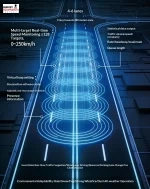
The TCR300 tracks up to 128 vehicles at once and reports each target’s distance, lane position and speed (0 to 250 km/h). The speed monitoring configuration is suited to speed surveys, variable speed limit systems, speed warning signs and enforcement support.
Traffic Flow Statistics Output
In the flow monitoring configuration, the radar produces lane-by-lane statistical data for traffic management centres and signal control:
- Traffic volume (vehicle count)
- Average speed
- Lane occupancy
- Flow rate, time headway and maximum values
- Queue length at intersections
Virtual Loop Setting and Presence Detection
The size and position of each virtual loop (detection zone) is set in the configuration software, and the radar provides adaptive real-time output of vehicle presence information. This removes the need for traditional inductive loops in signal actuation and stop-line detection.
Traffic Incident Detection
- Slow traffic and congestion
- Wrong-way driving
- Abnormal (stopped) parking
- Lane change
- Too-close following distance
FMCW Radar Technology
Frequency modulated continuous wave (FMCW) operation in the 77GHz band gives high range resolution, precise angle measurement and stable detection of both moving and slow vehicles. The dual-beam antenna combines a narrow 22° long range beam with a wide 90° medium range beam, so the radar covers the far approach and the near zone in front of the pole at the same time.
Choose Your TCR300 Configuration
| Option | Choices | Best For |
| Interface | COM RS485 | Direct serial connection to signal controllers, RTUs and data loggers over long cable runs |
| Interface | COM RJ45 | Ethernet (TCP) connection to network switches, edge computers and traffic management servers |
| Monitoring Mode | Speed monitoring | Per-vehicle speed measurement, speed warning signs and speed surveys |
| Monitoring Mode | Flow monitoring | Traffic counts, occupancy, headway, queue length and incident detection |
TCR300 Traffic Flow Radar Specifications
| Parameter | Specification |
| Brand | Nanoradar |
| Model | TCR300 |
| Product Type | 77GHz millimetre wave long-distance traffic flow radar |
| Modulation Mode | FMCW |
| Detection Range | 1.2 – 280 m @ 0° (LRR); 1.2 – 50 m @ ±45° (MRR) |
| Lanes Covered | 4 – 6 lanes |
| Maximum Targets | 128 targets tracked simultaneously |
| Range Resolution (point target, non-tracking) | 1.2 m (two objects distinguished at 1.5 – 2 times the resolution) |
| Distance Accuracy | ±0.60 m |
| Angle Range | ±11° @ ±6 dB |
| Angular Accuracy | 0.2° @ 0° / 1° @ ±45° |
| Speed Range | 0 – 250 km/h (+ moving away, – approaching) |
| Velocity Resolution | ±0.43 km/h |
| Speed Accuracy | ±0.36 km/h |
| Cycle Period | 80 ms |
| Elevation (Pitch) Beam, -6 dB | 13° |
| Azimuth Beam, -6 dB | 90° (MRR); 22° (LRR) |
| Data Output | Target speed and position, traffic volume, average speed, occupancy, headway, queue length, presence and incident events |
| Interface | RS485 or RJ45 Ethernet (select option) |
| Power Supply | 12 VDC |
| Power Consumption | ≤4 W |
| Weight | 650 g |
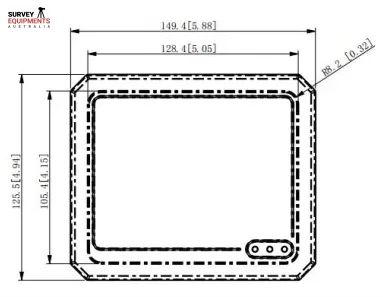
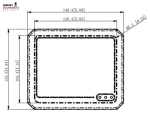
| Housing Dimensions | 149.4 x 125.5 mm (front face) |
| Housing Material | PBT front shell, die-cast aluminium bottom shell |
| Protection Rating | IP66 |
| Operating Temperature | -40 °C to +70 °C |
| Storage Temperature | -40 °C to +85 °C |
| Recommended Mounting | 3 – 6 m height, 0° – 15° downward tilt, roadside pole or overhead gantry |
| Condition | New |
Installation of the TCR300 Radar Sensor
- Mount the radar on a roadside pole, L-bar or overhead gantry at a height of about 3 to 6 m.
- Aim the radar along the traffic direction with a downward tilt of 0° to 15° so the beam covers the target lanes.
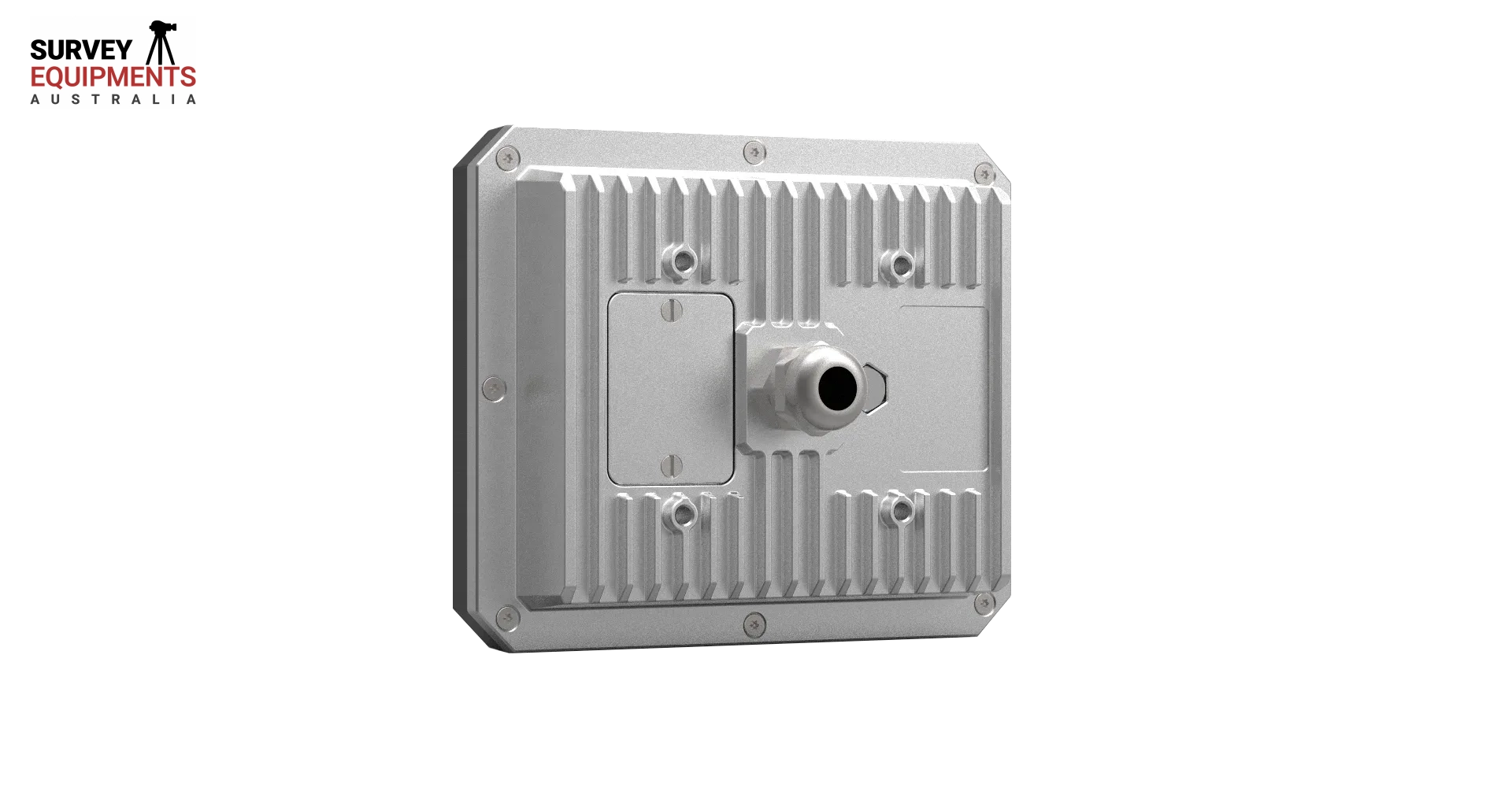
- Connect 12 VDC power and the RS485 or RJ45 data line through the sealed rear cable gland.
- Use the PC configuration tool to enter installation height and angles, draw the lanes and set virtual loops and counting zones.
- Verify detections against live video, then connect the output to your controller or traffic platform.
Applications and Use Cases
- Urban intersection traffic signal control and queue length measurement
- Motorway, freeway and expressway traffic flow statistics
- Tunnel and bridge full-section traffic monitoring and incident detection
- Wrong-way driver and stopped vehicle alert systems
- Road work zone safety warning with audio and light alarms
- Vehicle-road cooperative (V2X) and smart city sensing
- Traffic engineering surveys and road safety research
Why Choose the TCR300 Traffic Radar?
- 280 m reach and 128 target capacity from one compact sensor
- Covers both the far approach and the stop-line zone with a dual-beam antenna
- Non-intrusive installation with no lane closures for loop cutting
- Reliable data day and night in all weather
- RS485 or Ethernet output to suit your controller
- Brand new unit
Related Equipment
- Continental ARS408-21 77GHz Long Range Millimetre Wave Radar Sensor 250m
- Continental ARS548 RDI 4D Imaging Radar Sensor 77GHz 300m
- Continental ARS620 77GHz Long Range Radar Sensor 280m
- Continental SRR630 77GHz Corner Radar Sensor 200m
- RoboSense M1 Plus Solid-State LiDAR Sensor 200m
Frequently Asked Questions
What is the Nanoradar TCR300 used for?
The TCR300 is a 77GHz traffic flow radar used to count vehicles, measure speed, occupancy, headway and queue length, and detect incidents such as wrong-way driving and abnormal parking on urban roads, intersections, motorways, tunnels and bridges.
How far can the TCR300 detect vehicles?
It detects vehicles from 1.2 m up to 280 m on its long range beam, and up to 50 m across a ±45° wide beam close to the radar.
How many lanes and targets can the TCR300 monitor?
One TCR300 covers 4 to 6 lanes and tracks up to 128 targets at the same time.
What is the difference between the speed monitoring and flow monitoring versions?
The speed monitoring version focuses on per-vehicle speed measurement for speed surveys and warning signs. The flow monitoring version outputs traffic statistics such as volume, occupancy, headway, queue length and incident events.
Should I choose the RS485 or RJ45 interface?
Choose RS485 for direct serial wiring to a signal controller, RTU or data logger. Choose RJ45 for an Ethernet (TCP) connection to a network switch, edge computer or traffic management server.
Does the TCR300 work in bad weather?
Yes. As a millimetre wave radar it operates in rain, snow, fog, strong wind, ice and dust, day and night, and the housing is rated IP66.
How is the TCR300 installed?
Mount it on a roadside pole or overhead gantry at about 3 to 6 m height with a 0° to 15° downward tilt, then set lanes and virtual loops in the configuration software.
What power does the TCR300 need?
It runs on 12 VDC and consumes 4 W or less.


Reviews
There are no reviews yet.