



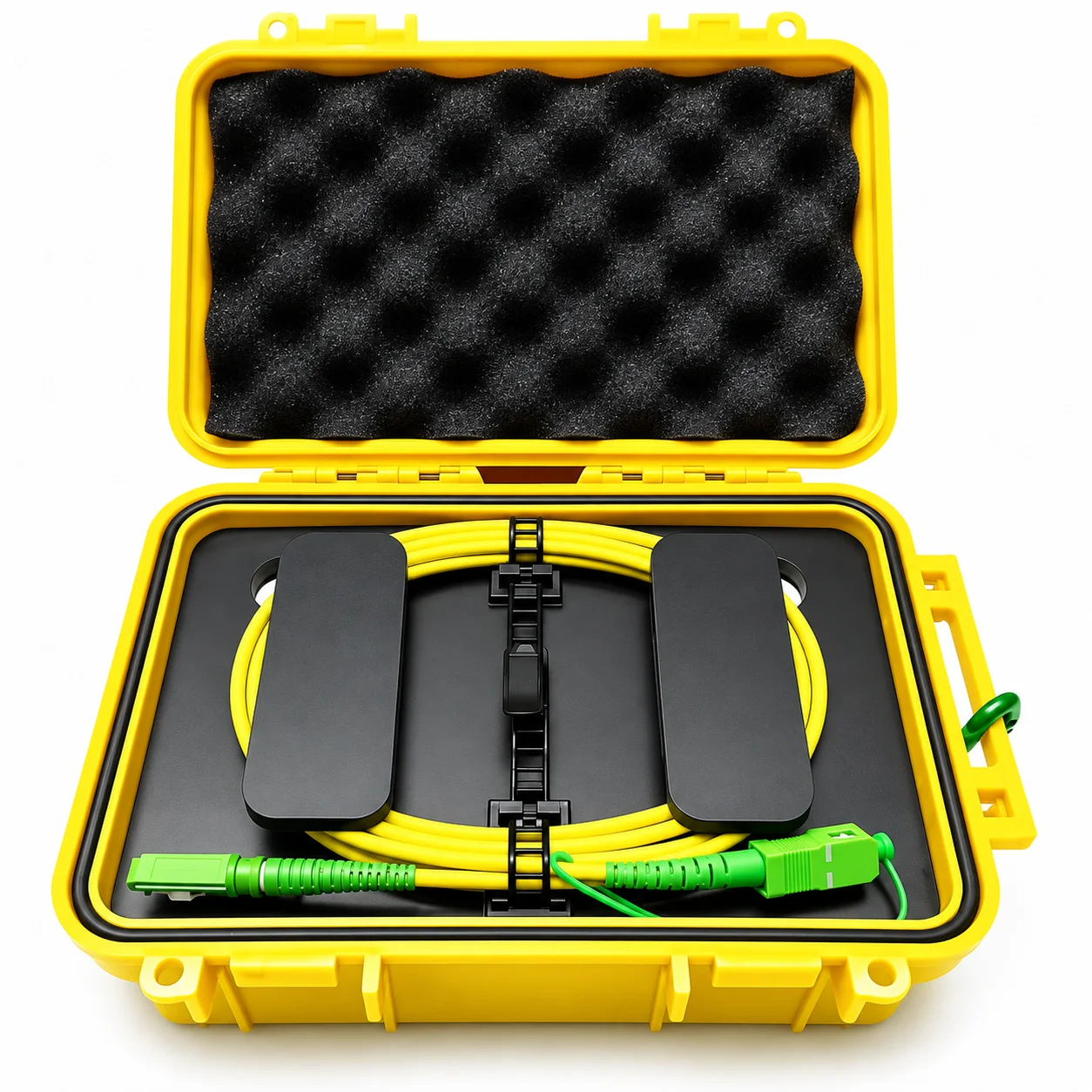
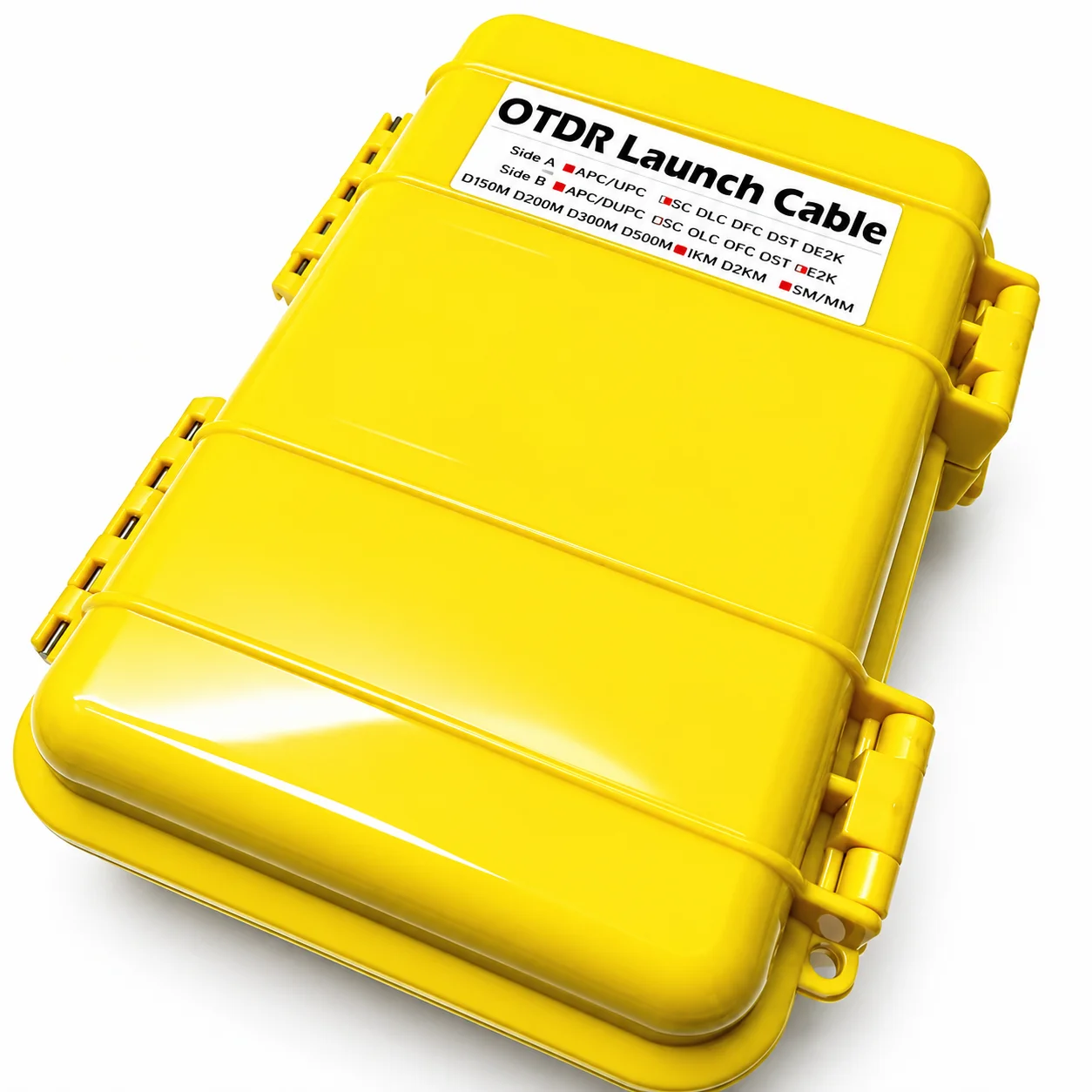
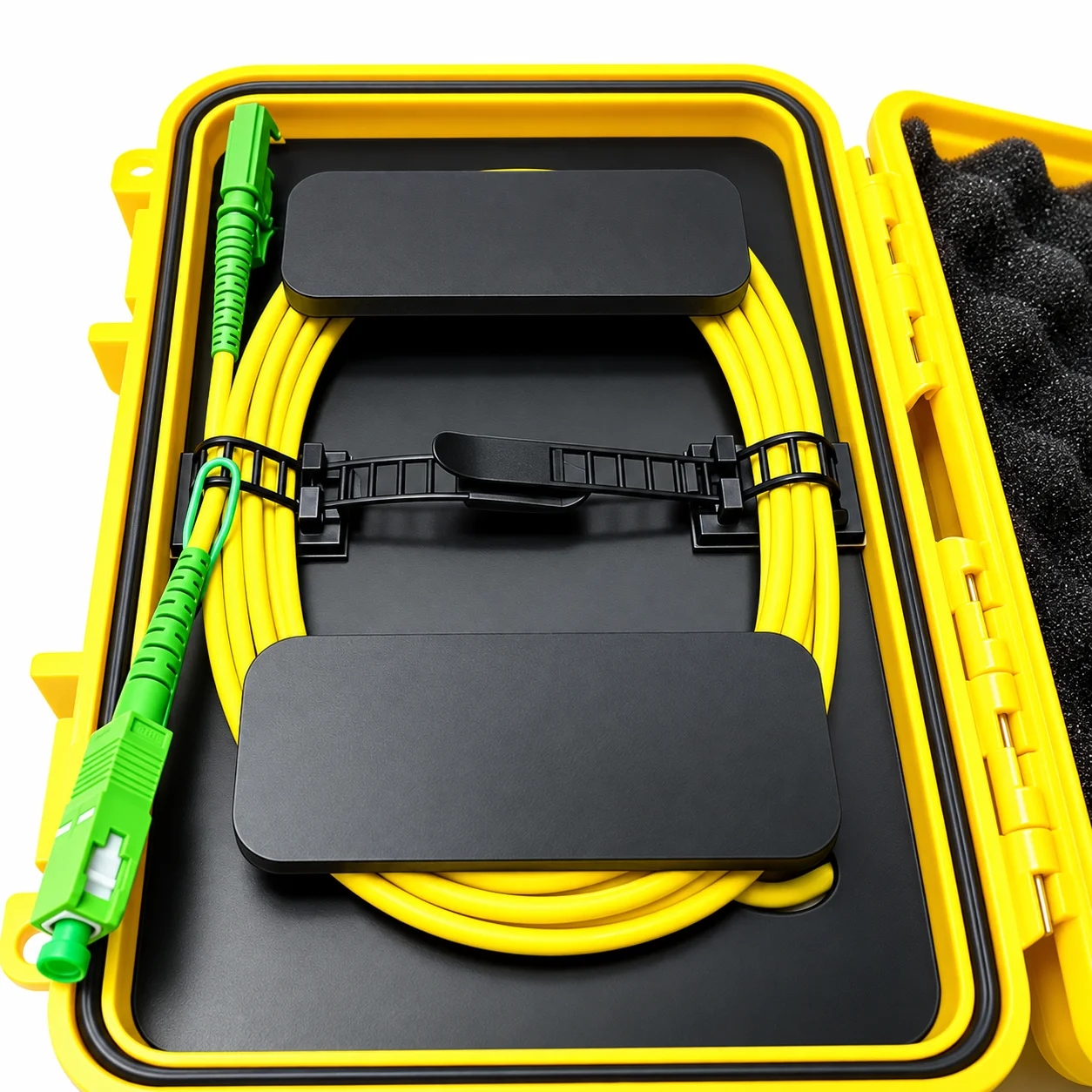
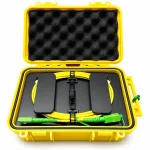
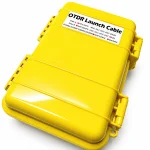
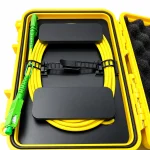


An OTDR launch cable is a fixed length of single-mode optical fibre, wound inside a protective carrying case, that is connected between an optical time domain reflectometer (OTDR) and the fibre link under test. This 1km E2000/APC OTDR launch cable eliminates the instrument’s near-end dead zone, letting technicians see and accurately measure the very first connector, splice and bend on a fibre run that would otherwise be hidden inside the OTDR’s own test pulse.
What Does This OTDR Launch Cable Do?
Every OTDR has a “dead zone” immediately after the test pulse is launched, during which it cannot resolve nearby events. A launch fibre also called a pulse suppressor, fibre ring or launch box inserts a known length of fibre between the OTDR and the link under test, pushing the first connector and splice past the dead zone so they can be measured accurately.
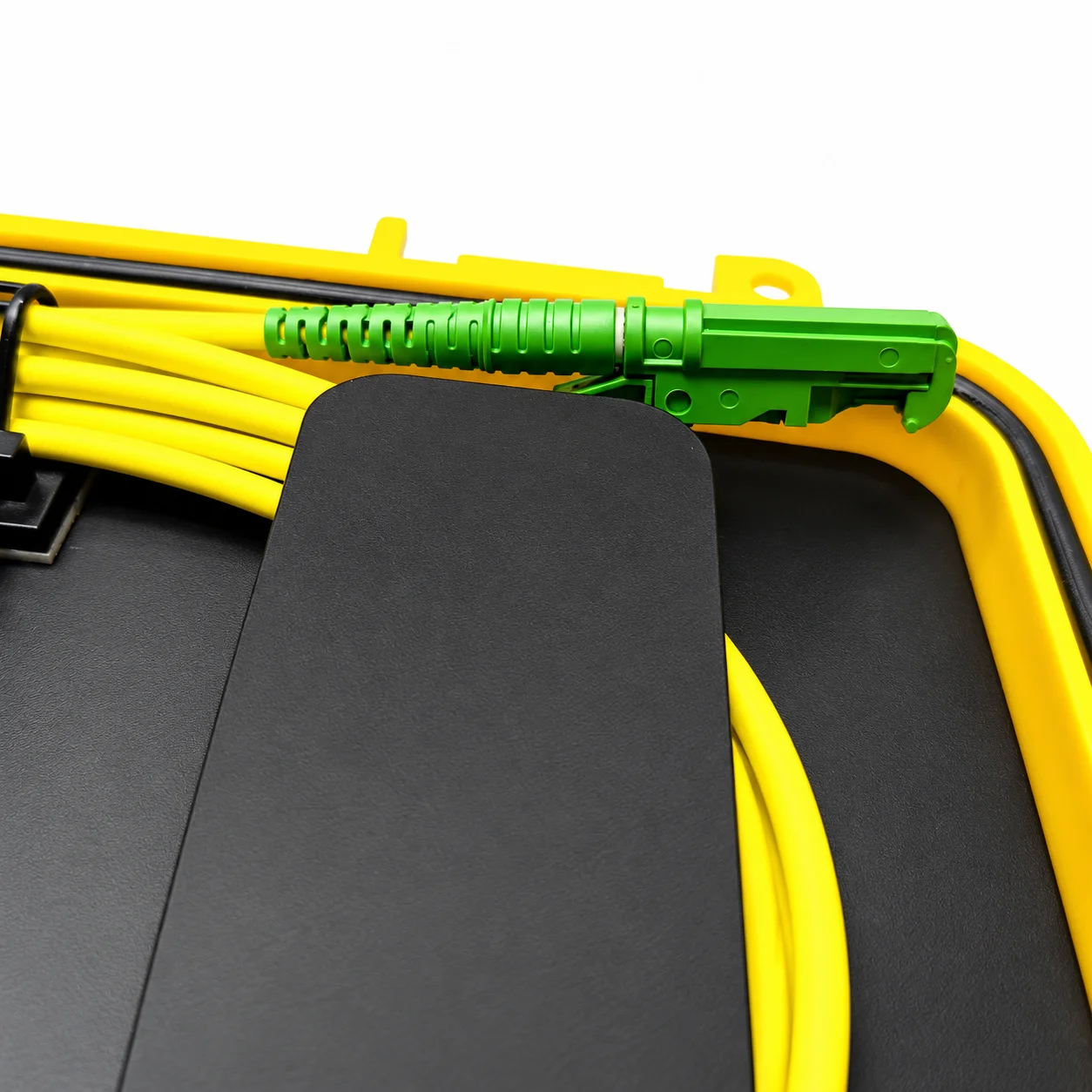
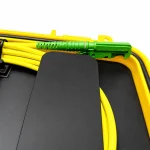
This fibre optic launch cable is built around 1km of single-mode fibre housed in a rugged, water- and dust-resistant case, with an E2000/APC connector on the OTDR side and a choice of SC, LC or E2000 connector (APC or UPC polish) on the output side.
Key Features
- Removes the OTDR near-end dead zone for accurate first-connector and first-splice measurement
- G652D single-mode fibre for low attenuation and stable signal integrity at 1310/1550nm
- E2000/APC connector into the OTDR for low back-reflection and a secure, keyed connection
- Choice of SC, LC or E2000 output connector, in APC or UPC polish, to match your link under test
- Nonmetal, waterproof and dustproof carrying case that will not dent, corrode or conduct electricity
- Compound latch for a positive seal with easy, single-hand opening
- Auto purge valve compensates for pressure changes with altitude and temperature
- Case interior can house up to 2,000 metres of coiled fibre
- Suited to installation testing, acceptance testing, technician training and calibration work
Specifications
| Spec | Detail |
| Model / Part No. | OLC-E2K-1KM |
| Connector A (to OTDR) | E2000/APC (E2000/UPC on the UPC-UPC variant) |
| Connector B (to fibre link) | SC/APC, SC/UPC, LC/APC, LC/UPC, E2000/APC or E2000/UPC — selectable |
| Fibre Type | Single-mode G652D, 9/125µm |
| Launch Fibre Length | 1km (1000m) coiled |
| Wavelength | 1310nm / 1550nm |
| Housing | Waterproof, dustproof, nonmetal case with compound latch and auto purge valve |
| Power Source | Non-powered (passive optical device) |
| Condition | New |
Applications
- OTDR near-end dead zone elimination
- Fibre link acceptance and commissioning testing
- First-connector and first-splice loss/reflectance measurement
- FTTH, FTTB and FTTC installation testing
- Telecom and fibre technician training
- OTDR calibration and lab reference testing
How To Use This Launch Cable
1. Connect to your OTDR
Attach the E2000/APC connector directly to your OTDR’s optical output port.
2. Connect to the link under test
Attach the output connector (SC, LC or E2000, in your chosen APC or UPC polish) to the fibre link you are testing.
3. Run your OTDR trace
The 1km launch fibre pushes the near-end dead zone before the first connector on your link, so the OTDR trace resolves it cleanly. Repeat at the far end with a receive/tail fibre for a two-ended test where required.
Frequently Asked Questions
What does an OTDR launch cable do?
It inserts a known length of fibre between the OTDR and the link under test so the instrument’s near-end dead zone falls inside the launch cable instead of over the first connector or splice on the actual link, allowing that first event to be measured accurately.
Why do I need a launch cable with my OTDR?
Without one, the OTDR’s dead zone can hide loss, reflectance or damage at the very first connector often the most failure-prone point on a fibre run from the test trace.
Can I choose different connectors on each end?
Yes. This launch cable is available with an E2000/APC (or E2000/UPC) connector on the OTDR side and SC, LC or E2000 in APC or UPC polish on the output side — select the combination that matches your OTDR and the link you’re testing.
Is this launch cable single-mode or multimode?
It uses G652D single-mode fibre, suited to 1310nm and 1550nm single-mode OTDR testing.
How long is the launch fibre?
1km (1000m) of coiled fibre, housed in a protective carrying case that can hold up to 2,000m of fibre.
Does the case protect the fibre in the field?
Yes. The nonmetal case is waterproof and dustproof, with a compound latch for a secure seal and an auto purge valve to equalise pressure as altitude or temperature changes.


Reviews
There are no reviews yet.