




Surveying equipment plays a crucial role in the oil industry across various stages of exploration, production, and maintenance. Here’s a breakdown of its significance:
Exploration:
Surveying equipment, such as total stations and GNSS and GPS receivers, is used to accurately map the terrain and identify potential sites for oil exploration. This includes creating detailed topographic maps, identifying surface features, and assessing the geological formations where oil deposits may be present.
Drilling:
During the drilling process, surveying instruments like gyroscopes and inclinometers are employed to ensure that the boreholes are drilled accurately and precisely according to the planned trajectory. This is crucial for reaching the target oil reservoir while avoiding hazards such as geological faults or neighbouring wells.
Reservoir Monitoring:
Surveying tools are used to monitor and manage oil reservoirs throughout their lifecycle. Instruments like tiltmeters and strain gauges help measure subsurface movements and changes in reservoir pressure, allowing engineers to optimise production and mitigate risks such as subsidence or reservoir depletion.Pipeline Construction and Monitoring:
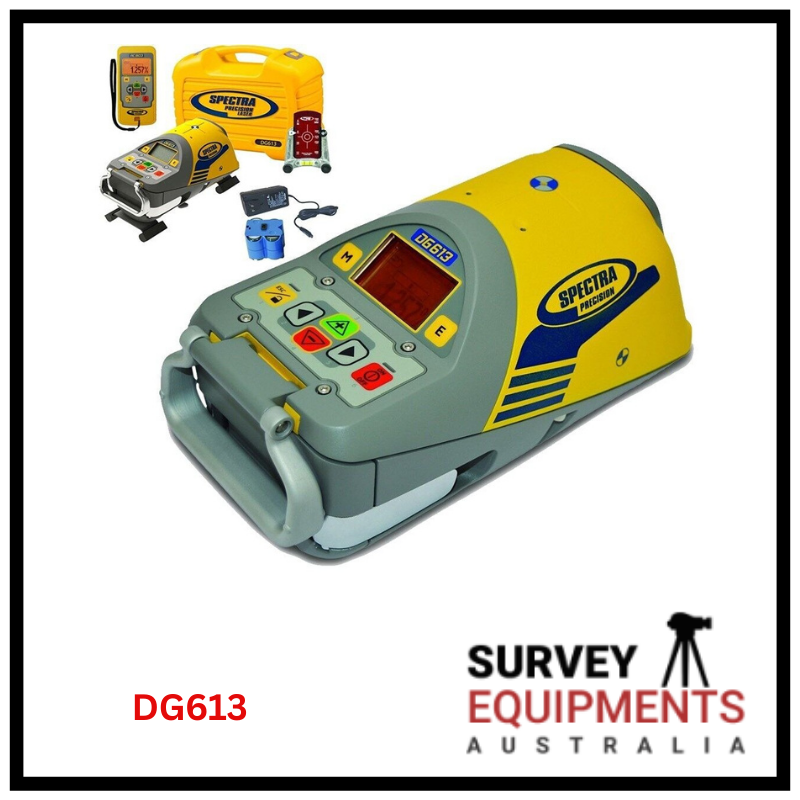
Surveying equipment is used to plan the route of pipelines and ensure they are laid out accurately over long distances. This involves conducting detailed surveys of the terrain, determining elevation changes, and identifying any obstacles or environmental concerns along the route. Once the pipelines are installed, surveying tools continue to be used for monitoring purposes, detecting any potential leaks or structural issues. Where wall-thickness and corrosion checks are required, ultrasonic NDT equipment can complement the surveying workflow; see our Olympus ultrasonic testing and NDT equipment and Olympus ultrasonic testing guide.Facility Construction and Maintenance:
Surveying instruments are employed in the construction of oil refineries, processing plants, and other facilities within the oil industry. They help ensure that structures are built according to design specifications and meet safety standards. Additionally, surveying equipment is used for ongoing maintenance and inspection activities to assess the condition of infrastructure and identify any necessary repairs or upgrades.
Overall, surveying equipment plays a vital role in ensuring the efficient and safe operation of oil industry activities, from exploration and extraction to transportation and refining. For a broader directory of SEA technical content, visit our Survey Equipment Technical Resource Centre Australia. Accurate surveying data is essential for decision-making, risk management, and regulatory compliance throughout the oil production process. For drilling-specific measurement systems such as seismic, MWD/LWD and downhole monitoring tools, see our oil and drilling measurement equipment guide. For practical instrument verification and field-quality routines, see our survey equipment calibration and field-check guide.


